
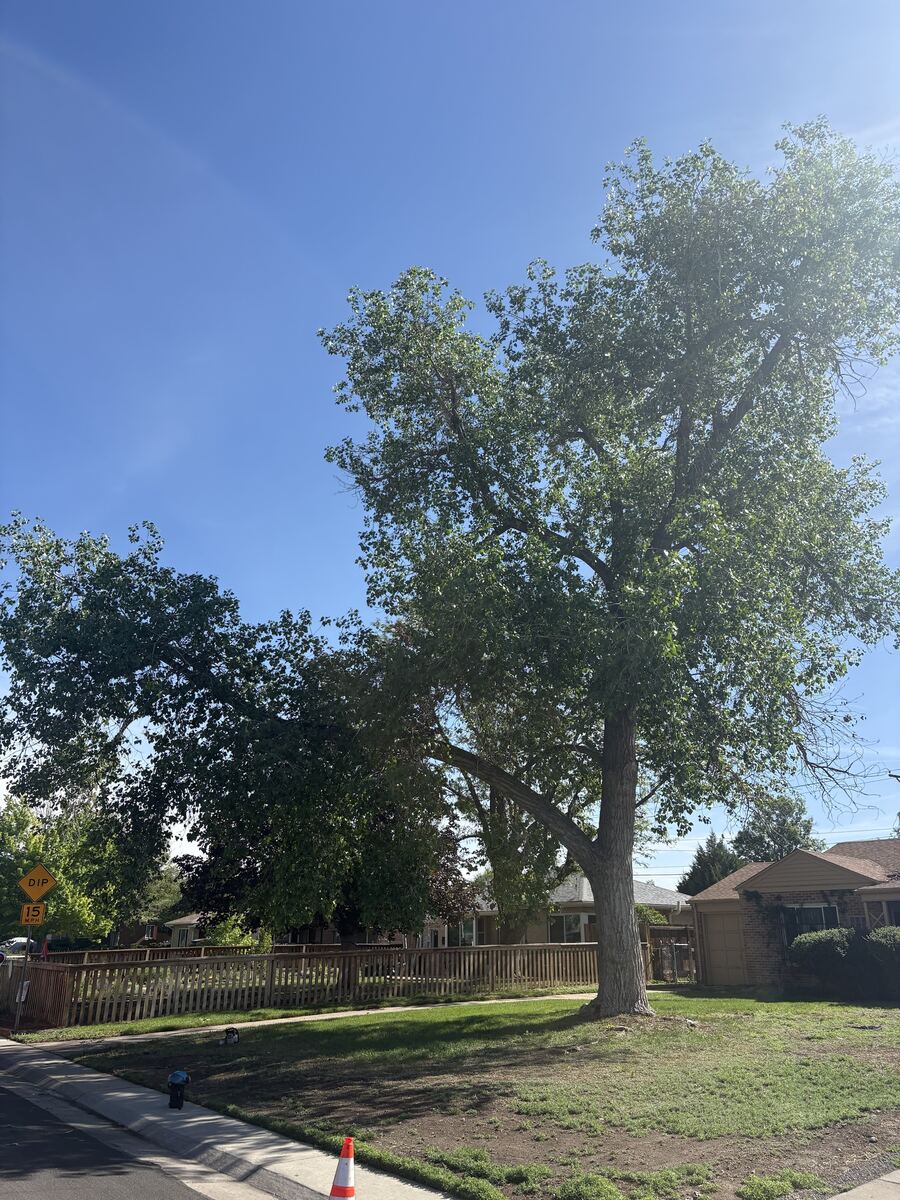
Tree trimming & pruning in Denver
Proper cuts for health, safety and clearance, timed for Colorado's seasons.
Tree Trimming & Pruning
How we help
Good pruning makes a tree stronger, safer and better looking for decades. Bad pruning, like topping or flush cuts, invites decay and makes problems worse. Every Communitree trimming job is planned by an ISA Certified Arborist and done to industry pruning standards.
We'll look at the whole tree, explain what we recommend and why, and only remove what helps. Our customers say it best: one family told us no one had ever pruned their mature ash trees as well in 38 years.
What's included
- Crown cleaning: removing dead, diseased and broken branches
- Crown thinning to reduce wind load and let light through
- Crown raising for clearance over roofs, sidewalks and driveways
- Structural pruning for young trees
- Clearance from houses, gutters and chimneys
- Full cleanup, chipping and haul-away
Signs your tree needs trimming
- Dead or leafless branches in the canopy
- Limbs rubbing the roof or hanging over the house
- Branches crossing and rubbing each other
- Low limbs blocking sidewalks, driveways or views
- It's been more than 3–5 years since the last pruning
Reviews
Trusted by your neighbors
★★★★★“In the 38 years we have lived in this house, no one has ever come close to pruning our full grown ash trees as well as Ben did.”
★★★★★“Ben was both detailed and precise with his plan and execution of trimming my honey locust that is probably 50-60 years old.”
★★★★★“Ben went above and beyond on educating so that we can slow down the growth of our tree. HIGHLY recommend!”
FAQ
Tree Trimming & Pruning questions
When is the best time to prune trees in Denver?
For most deciduous trees, late winter while they're dormant is ideal. It's easier to see the structure, and wounds close quickly when spring growth starts. Dead, broken or hazardous limbs can and should be removed any time of year.
How often should trees be trimmed?
Most mature shade trees benefit from pruning every 3–5 years. Young trees do best with light structural pruning every 1–3 years. Fast growers like cottonwoods and silver maples may need attention more often.
Is tree topping ever a good idea?
No. Topping removes the tree's food-making canopy, triggers weak, fast regrowth and invites decay. Proper thinning and reduction cuts achieve the same goals without the damage.
Do I need a permit to trim a tree in Denver?
Trees on private property generally don't need a permit. Trees in the public right-of-way, often the strip between the sidewalk and the street, require a permit from Denver's Office of the City Forester. The permit is free, and as a Denver-licensed tree contractor we can help you with it.
More services
Other ways we can help
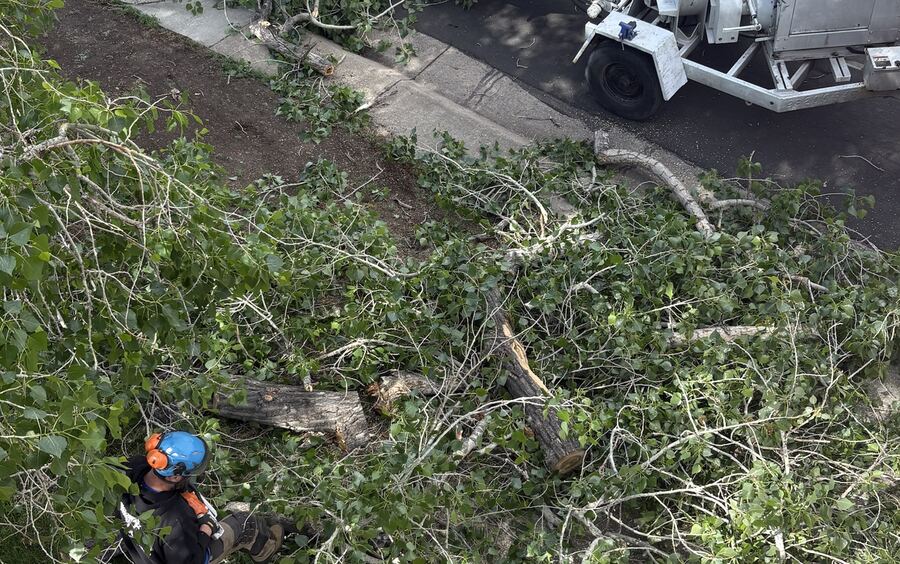
Emergency Tree Removal
Storm damage or a tree on the house? Fast, safe response, day or night.
Learn more →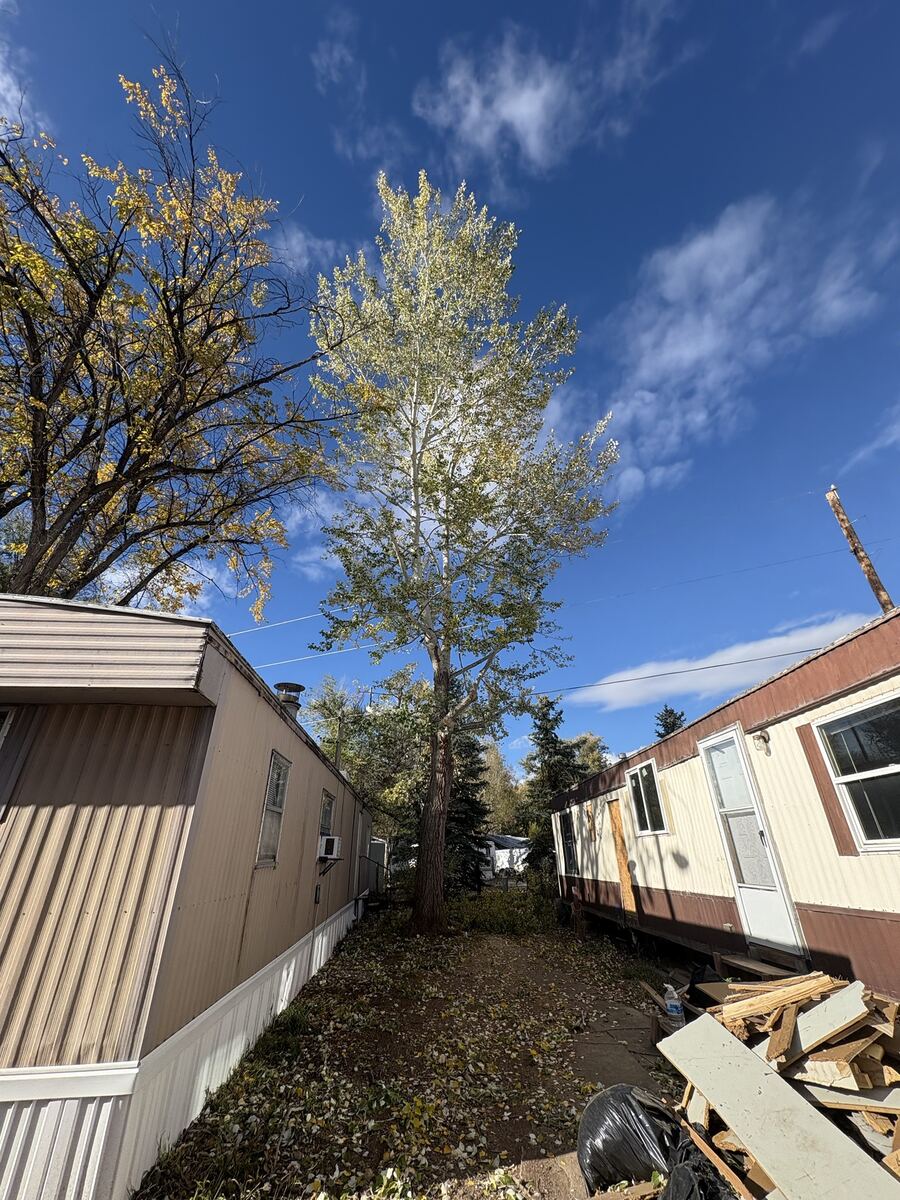
Tree Removal
Dead, hazardous or crowded trees taken down precisely, even in tight yards.
Learn more →
Stump Grinding
Stumps ground below grade so you can replant, sod or build.
Learn more →
Tree Care & Health
Assessments, cabling and bracing, and preservation for at-risk trees.
Learn more →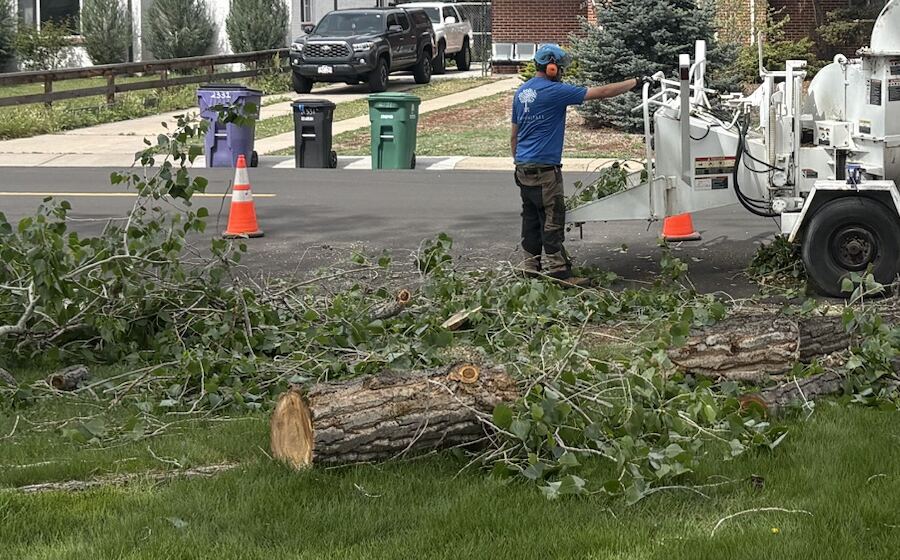
Firewood Sales
Seasoned firewood from our own jobs, so nothing goes to waste.
Learn more →Free estimate
Tell us about your tree
Send a few details and a photo and we'll get back to you, usually the same business day. For emergencies, call right away.
- Mon–Fri, 8am–6pm
Emergency removal 24/7 - Based in Denver, CO 80207
Serving the Front Range